
Behavioural Trust Signals
Behavioural Trust Signals assesses device and interaction data using a proprietary machine learning model to identify signs of manipulation or automated activity during Identity Verification. It provides an additional layer of protection against attacks such as deepfakes and video injection.
Signal collection takes place during the existing Identity Verification workflow and does not add verification steps for the client.
Overview
Deepfakes and video injection attacks can present convincing media without a live person participating in the capture process. Assessing the document or selfie alone may not reveal how the media was captured or submitted.
Behavioural Trust Signals adds context about the device environment and the client’s interactions during verification. This helps identify sessions that show signs of automation or manipulation.
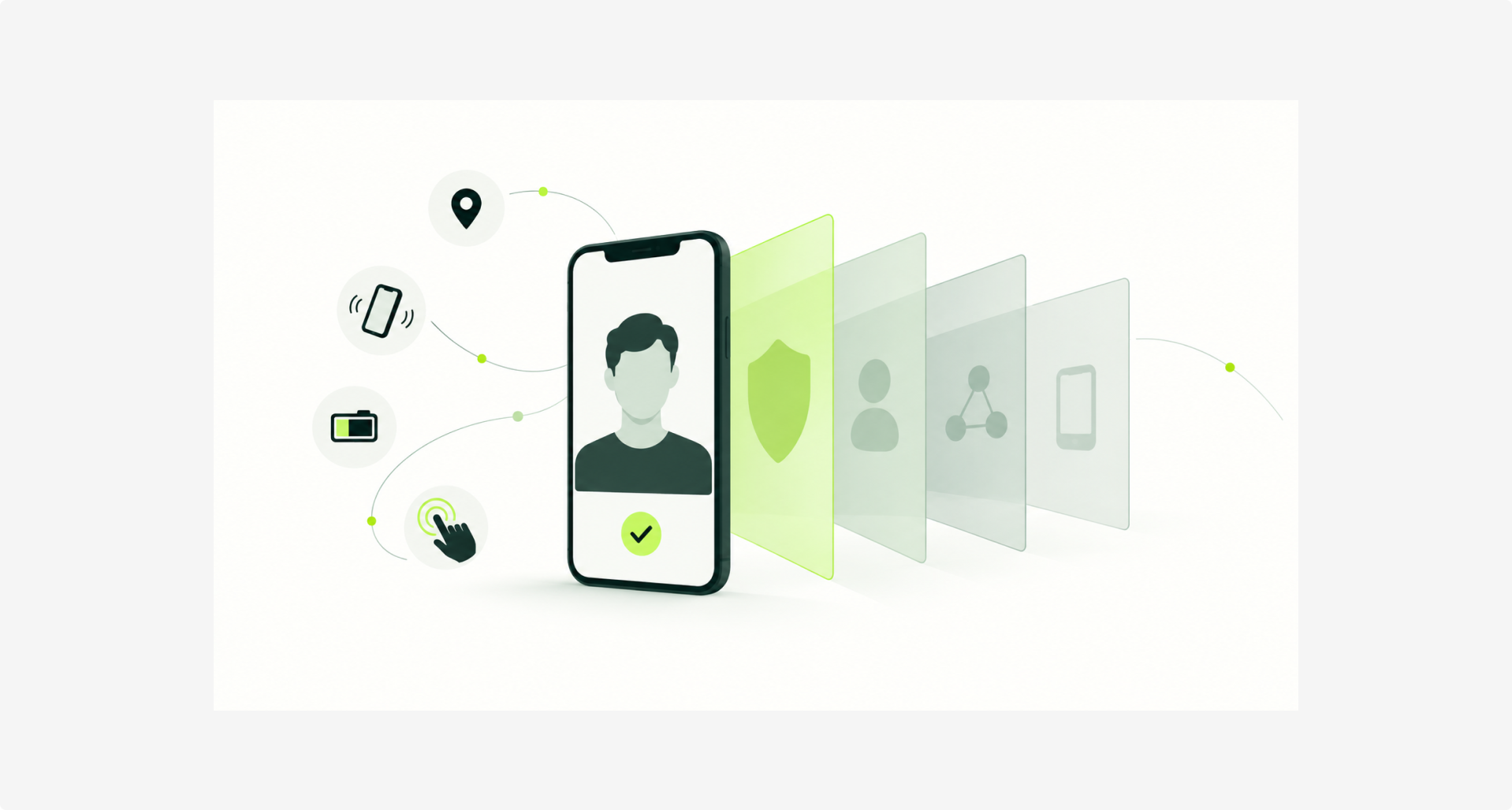
Device signals and verification layers
How it works
During Identity Verification, Behavioural Trust Signals collects and analyses device and interaction signals to identify patterns associated with genuine client behaviour, automation, or manipulation.
Behavioural Trust Signals operates as an additional layer in Fourthline’s cascading, multi-model detection system, alongside:
These layers assess different aspects of the identity verification session. Behavioural Trust Signals complements the document and selfie checks with device and behavioural context.
Verification Check
Fourthline performs the following check:
| Check | Description |
|---|---|
| User behaviour genuine | Assesses device and interaction signals to identify whether a verification session shows indicators of genuine user behaviour or signs of automation or manipulation. |
Attack types
Behavioural Trust Signals targets the following attack types:
| Attack type | Description |
|---|---|
| Deepfakes | AI-generated or manipulated media designed to imitate a live person. |
| Video injection | Pre-recorded, synthetic, or manipulated video inserted into the capture workflow instead of footage captured from a live camera. |
| Replay attacks | Previously captured images or videos reused during a new verification session. |
| Automation and bots | Scripted activity that mimics a client completing verification. |
| Manipulated device environments | Changes to the device environment that may indicate interference with verification. |
Collected signals
Behavioural Trust Signals analyzes sensor data across more than 300 signals, including:
- Motion, including gyroscope, accelerometer and rotation
- Environment signals
- Device location
- Cellular data
- VPN and network usage
- Hardware
- Screen properties
- Battery level and charging state
- Locale
- System uptime
The signals provide context for assessing session authenticity, and collection takes place during the existing verification workflow.
Detection performance
In Fourthline testing, Behavioural Trust Signals detected the majority of known deepfake and video injection attack cases. Behavioural Trust Signals operates alongside Fourthline's other defences, which together detect almost all known deepfake and video injection attacks.
Early results also show incremental detection of tampered-media fraud. Once fully operational, Behavioural Trust Signals is expected to catch additional tampered-media fraud that may otherwise go undetected, with the incremental impact varying by partner.
FAQ
How does Behavioural Trust Signals support CEN/TS 18099:2024?
CEN/TS 18099:2024 specifies approaches for detecting biometric data injection attacks, including attacks involving deepfakes and injected video.
Behavioural Trust Signals contributes to Fourthline's approach to detecting these attacks. It works alongside other fraud detection measures to identify signals associated with manipulated or injected biometric data, supporting the requirements described in CEN/TS 18099:2024.
What does Behavioural Trust Signals assess?
Behavioural Trust Signals analyzes sensor data across more than 300 signals.
Are there any SDK requirements or minimum versions?
There are no minimum Mobile or Web SDK version requirements. We recommend using the latest SDK version. Behavioural Trust Signals is enabled by Fourthline through a configuration change and does not require any additional integration.
Is Behavioural Trust Signals available for all Identity Verification workflows?
Yes. Behavioural Trust Signals is currently available for all Identity Verification workflows that include an active SDK biometric capture session, such as selfie or liveness. Support for Authentication workflows is planned for a future release.
Which attack types does it target?
It targets deepfakes, video injection attacks, replay attacks, automation and bots, and manipulated device environments.
Does it add steps to the verification workflow?
No. Signals are collected passively during verification. The client experience remains unchanged.
Does it replace document or selfie liveness checks?
No. Behavioural Trust Signals provides an additional layer of protection within Fourthline’s cascading, multi-model system, complementing Document Liveness and Selfie Liveness rather than replacing them.
Support
To configure Behavioural Trust Signals, contact your customer success manager.
Updated 7 days ago